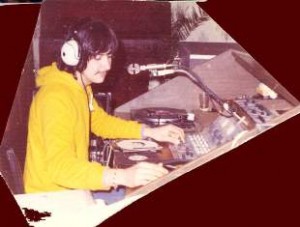
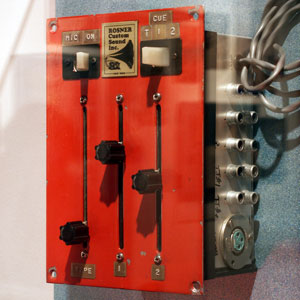
The first Dj mixer was seen around the late 50s to early 60s, similar to the mixers that radio stations were using. At that time there were no ‘discotheques’, but once basic audio mixers had evolved into what we now know as DJ mixers, many dancehalls incorporated DJ booths into their set up, and two turn tables and a dj mixer slowly because the standard for the newly formed Discotheques.
‘Rosie’ was the first known DJ mixer that came about in 1965 and it was the first device that allowed the ‘DJ’ to crossfade from one sound source to another without using two separate mixers. However this mixer was a one off special for Francis Grasso of the Haven Club. The first commercially available mixer was the Bozak CMA-10-2DL rotary mixer that was designed by Rudy Bozak in 1971, and soon after this, many DJ’s started to appear with their individual mixing styles. One of the most recognized is that of Grandmaster Flash who’s style in 1974 focused on quick mixing, or ‘cutting’. Soon after, in 1975 Grand Wizard Theodore invented ‘scratching’ and two years later Citronic Released the SMP101 mixer that was the first British mixer to have a horizontal cross fader.Up until 1977 the U.S market didn’t have a mixer with a horizontal cross fader control until the GLI PMX 7000 was introduced which replicated the Bozak and was known as the ‘poor mans Bozak’.
Nothing much changed on the mixer scene for about ten years; more companies such as pioneer were still trying to replicate the Bozak and not much advancement were made until 1986 when Rane introduced their MP 24 club mixer. This mixer was designed to provide top notch sound quality that made use of studio grade faders, LED output displays, assignable cross faders and advanced cueing options, although the basic design was still the same as all previous mixers.
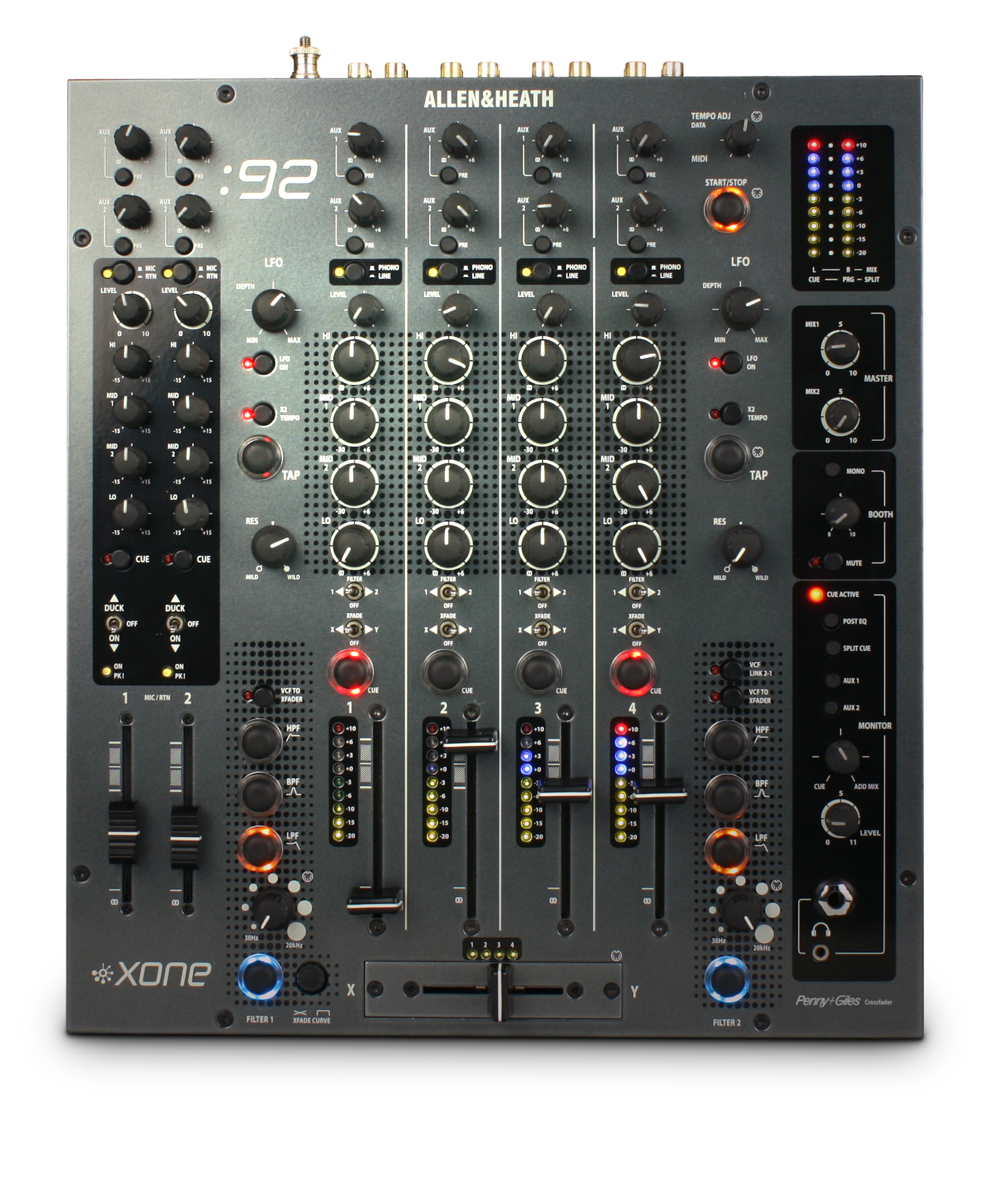
So now the market had split, there were companies such as vestax, technics and rane focusing on scratching mixers, and pioneer, urei and numark releasing mixers for clubs. Companies such as Allen and Heath had been making studio and live mixers since the 1970's, but around the late 90's and early 00's, they realised that there was a large market for club mixers because so many clubs spent all of their money on speakers and lighting but didn't even consider the fact that using bad mixers resulted in bad sound. A&H release the Xone range with the most noticeable mixer being the Xone 62 which is still renowned as one of the best Dj mixers money can buy. The 62 was focussed on delivering nothing but superior sound quality, this meant it had no useless effects, bar their world famous VCF filters. A main rival to Allen and Heath was Pioneer who had been making dj mixers for a number of years with their popular djm-500 and djm-600 mixers. Although, clubs quickly started to realise the superior quality of Allen and Heath and they began to take over.
Allen & Heath, Pioneer and Rane to this day are arguably the main leaders in this market. After the standard had been set with the Xone and DJM series mixers, companies started to experiment in other types of mixers, alternatives to analogue or digital. With the introduction of digital mixing using computers in the early 2000's, the market leaders soon started to develop mixers with midi controls that could control DJ software on a computer and soon there were mixers that were 100% dedicated to this with every knob, fader and button being midi assignable.
Most impressive of this style of mixer is the Rane 68 which was developed specifically for use with Serato software. Although other mixers like this were around, the Rane 68 was the first to have two usb 2.0 ports, which meant that two DJ's could work from the same mixer, and the next DJ could set up his computer easily using the other usb port.